Chip-Off NAND Flash Forensics on Severely Damaged Hardware
Microscopic Desoldering, Burnt PCB Circuit Restoration, and Raw Physical Memory Dump Extractions in ISO Class 100 Clean Rooms.
Executive Summary & Key Takeaways
- 01Chip-off forensics physically removes memory chips from damaged motherboards to read raw NAND silicon directly.
- 02Working inside an ISO Class 100 sterile clean room prevents particulate contamination from destroying microscopic BGA ball grids.
- 03Reconstructing the Flash Translation Layer (FTL) requires custom mathematical de-randomization and XOR pattern decoding.
1. Overcoming Physical Media Catastrophe
In critical arson, vehicular collision, homicide, or corporate sabotage cases, suspect devices (smartphones, dashcams, encrypted SSDs, flight recorders) are often retrieved in heavily mutilated conditions.
When power circuitry, controller chips, or interface traces are burned or crushed, supplying power to the motherboard risks permanent electrical shorting. Chip-off forensics bypasses damaged controllers by physically desoldering the BGA (Ball Grid Array) NAND flash memory chips directly from the circuit board.
- Precision infrared and thermal desoldering profiling calibrated to prevent silicon core delamination.
- Ultrasonic microscopic chemical cleaning of lead-free solder residue and oxidation.
- Precision reballing of 0.3mm micro-pitch solder ball grids using specialized stencil arrays.
2. Raw Binary Extraction & Flash Translation Layer (FTL) Decoding
Once the NAND chip is seated in high-precision hardware socket readers, raw bit-level binary dumps (page, spare, and OOB areas) are extracted. However, raw NAND data is encrypted by proprietary wear-leveling algorithms and controller-specific scramble patterns.
Our lab engineers apply reverse-engineered XOR descrambling algorithms, ECC error correction passes, and block allocation table reconstructions to transform raw bits into a fully mountable logical file system.
“Stellar maintains an ISO 14644-1 Class 100 Clean Room providing laminar air flow with < 100 particles of size 0.5 µm per cubic foot to protect exposed silicon dies during physical microscopic surgery.”
3. Evidentiary Preservation in Extreme Hardware Recovery
Every stage of physical hardware manipulation is recorded via high-definition microscopic video feeds. The resulting binary images are hashed immediately upon extraction, providing an unbroken evidentiary chain showing zero data fabrication.
Statutory Defensibility & Regulatory Standards
| Framework / Legislation | Section / Clause | Forensic Relevance |
|---|---|---|
| ISO 14644-1 Class 5 / Class 100 | Cleanroom Environmental Control | Sterile airborne particulate control for exposed semiconductor media |
| IPC/WHMA-A-610 / IPC-7711 | Micro-Electronic Rework | Industry benchmarks for desoldering and PCB track micro-jumpering |
| Scientific Working Group on Digital Evidence (SWGDE) | Hardware Handling | Best practices for hardware and micro-controller forensic extraction |
Related Services & Solutions
Facing a Similar Digital or Legal Matter?
Speak directly with our senior examiners under strict confidentiality.
Request ConsultationRelated Insights
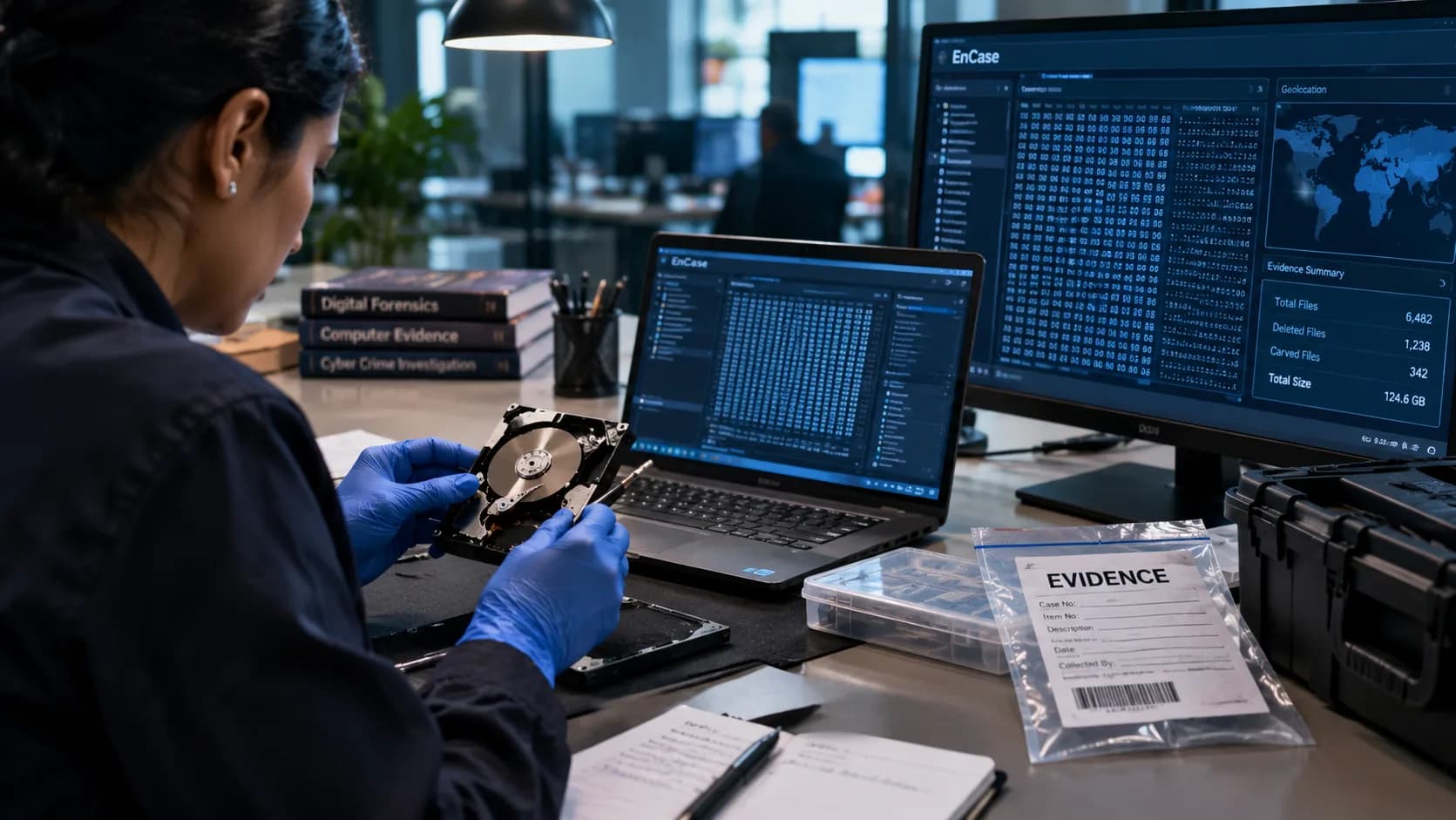
The Next Generation of Global Digital Forensic Discovery
As enterprise infrastructure disperses across multi-cloud regions, hybrid data centers, and encrypted endpoints, digital forensics requires unprecedented discipline. This research explores modern bit-stream imaging protocols, cryptographic integrity verification, and legal defensibility under updated evidentiary frameworks.
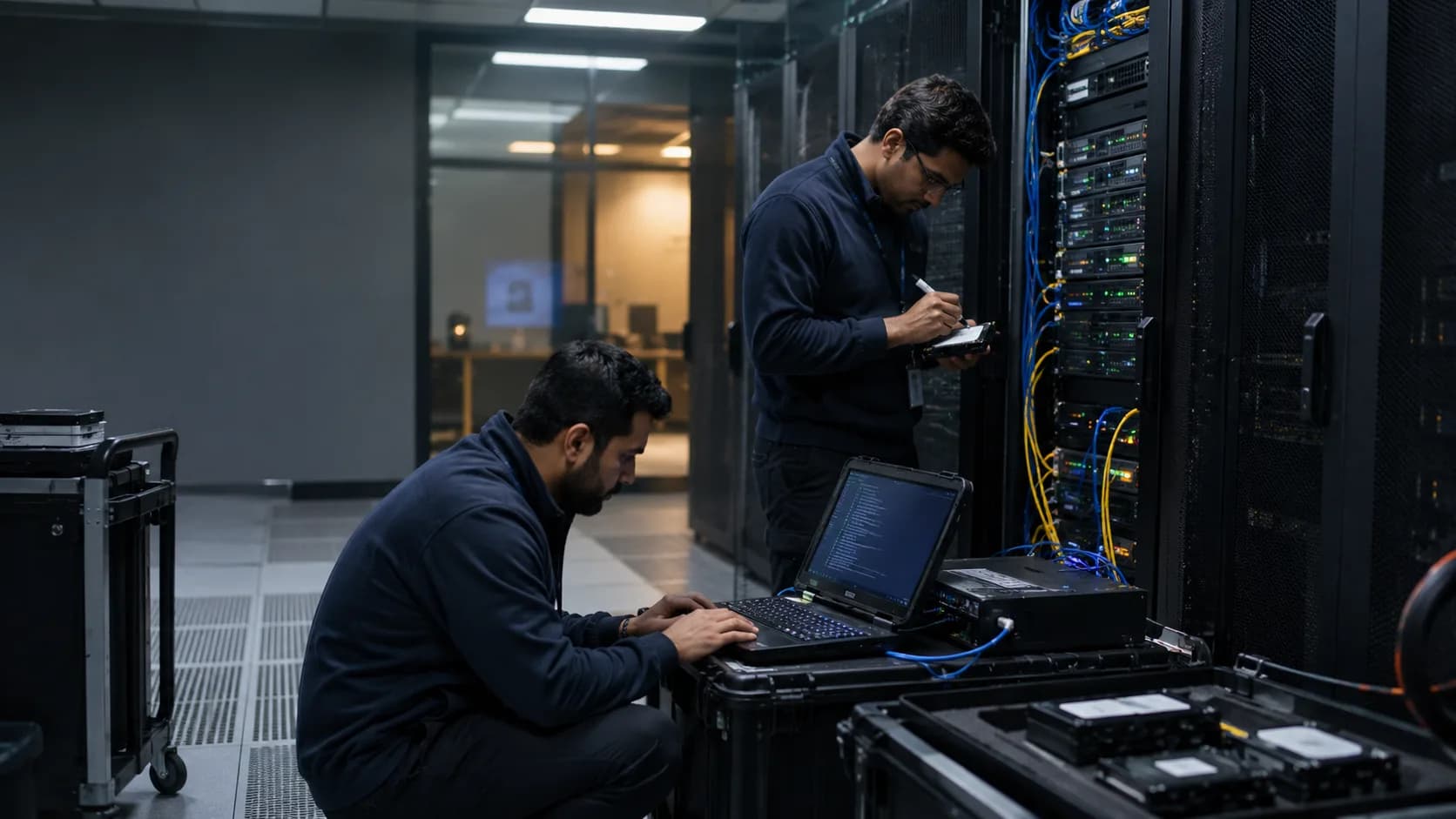
Enterprise Incident Response & Volatile Memory Extraction
When high-velocity ransomware strikes, conventional system shutdowns destroy crucial volatile memory artifacts, active network sockets, injected DLLs, and decrypted payload keys. This white paper details how rapid live RAM triage preserves critical IOCs while executing immediate containment within 90 minutes.